Mysuru · Karnataka · India
The Complete History of Mysore
From Neolithic ash mounds and Ganga copper plates to Hoysala soapstone, the Wadiyar durbar, Tipu Sultan's rockets and the modern heritage city — twenty-five chapters, each with numbered footnotes and a full bibliography.
Quick navigation
Featured timeline
Four turning points
1610
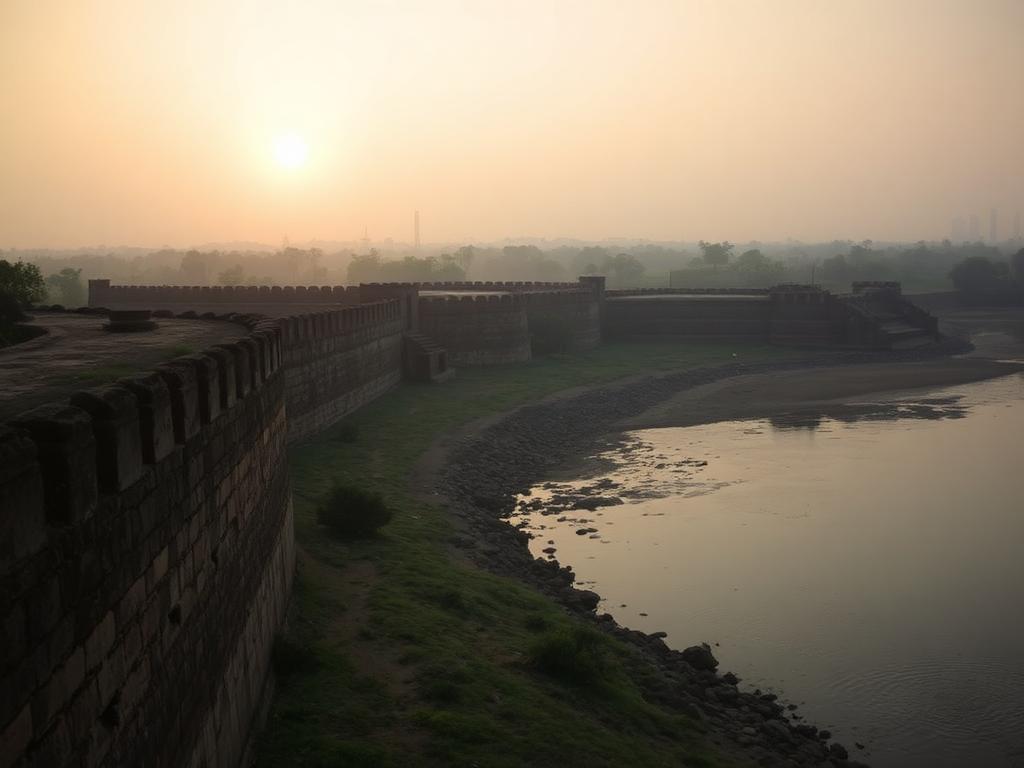
Raja Wadiyar I takes Srirangapatna
Mysore becomes effectively independent; the Dasara durbar is instituted at the new capital.
Read the chapter4 May 1799
Fall of Srirangapatna and death of Tipu Sultan
The kingdom is partitioned; a reduced Mysore is restored to the Wadiyars under subsidiary alliance.
Read the chapter25 March 1881
The Rendition of Mysore
Rule returns to the Wadiyars; the Mysore Representative Assembly is convened the same year.
Read the chapter1 November 1973
Mysore State renamed Karnataka
Observed annually as Kannada Rajyotsava.
Read the chapter
Historical periods
Chapters by era
I · Land and Origins
Chapter 1 · Deep time – present
Geography and Setting
The Deccan plateau, the Kaveri basin and Chamundi Hill shaped every settlement, dynasty and irrigation economy that followed in the Mysore region.
Chapter 2 · c. 3000 BCE – 300 CE
Early Settlements and Prehistory
Neolithic ash mounds, megalithic burials, Ashokan edicts and early Tamil-Kannada contact form the earliest documented human record of the Mysore country.
II · Ancient and Medieval Dynasties
Chapter 3 · c. 350 – 1000 CE
The Western Gangas
From Kolar and Talakadu the Western Gangas ruled southern Karnataka for six centuries, patronised Jainism and raised the colossus of Shravanabelagola.
Chapter 4 · c. 543 – 1116 CE
Chalukyas, Rashtrakutas and Cholas
Imperial powers of the Deccan repeatedly contested southern Karnataka, leaving temple architecture, Kannada literature and a durable administrative template.
Chapter 5 · c. 1026 – 1343 CE
The Hoysalas
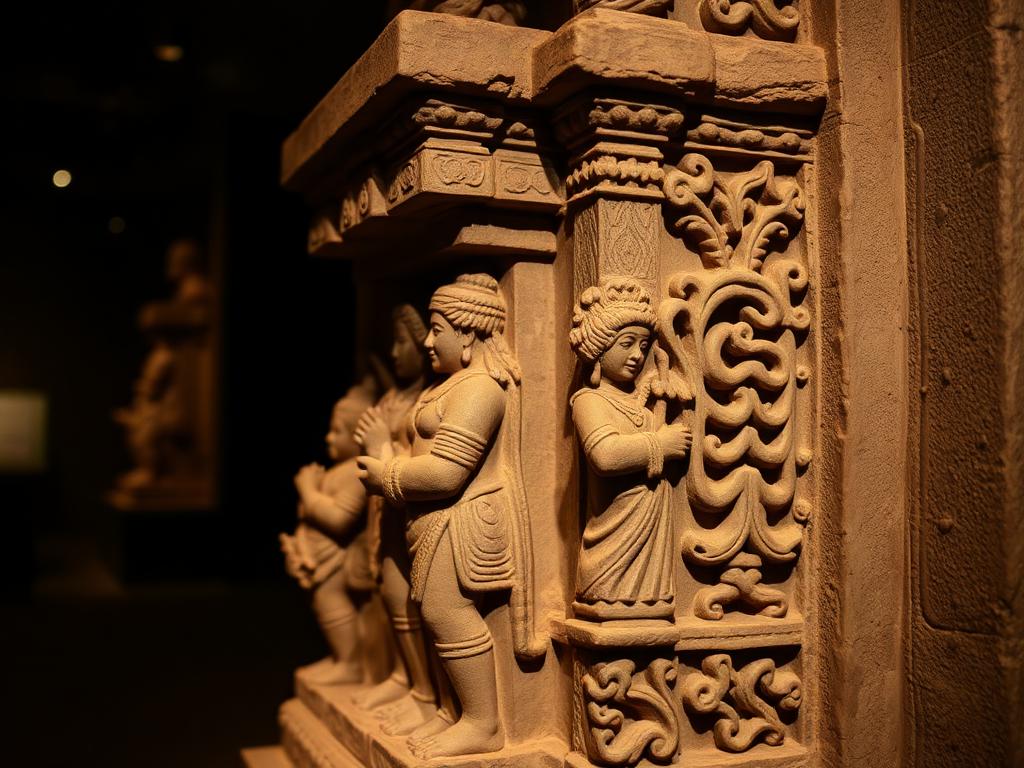
From Belur, Halebidu and later Srirangapatna's hinterland, the Hoysalas created the most ornate temple architecture in southern India.
Chapter 6 · 1336 – 1646
The Vijayanagara Empire
Under Vijayanagara's nayaka system the small chiefdom of Mysore first appears in the record — and inherits sovereignty when the empire collapses.
III · The Kingdom and Its Contests
Chapter 7 · 1399 – 1950
The Wadiyar Dynasty
Twenty-five rulers across five and a half centuries — from a village chiefdom, through eclipse and restoration, to a modern constitutional monarchy.
Chapter 8 · 1721 – 1782
Hyder Ali
A cavalry officer who became de facto ruler of Mysore, built a European-drilled army and fought the English East India Company to a standstill.
Chapter 9 · 1750 – 1799
Tipu Sultan
The 'Tiger of Mysore': innovator in rocketry and revenue, diplomat to France and the Ottomans, and the last ruler to fight the Company on equal terms.
Chapter 11 · 1399 – 1947
The Kingdom of Mysore
An institutional portrait of the kingdom: revenue, army, court, coinage, dewans and the machinery that outlasted every dynasty change.
IV · Colonial and Modern Era
Chapter 10 · 1799 – 1947
The British Period
Subsidiary alliance, the Commission of 1831–1881, the Rendition, and a princely state that became a byword for progressive administration.
Chapter 12 · 1881 – 1950
The Princely State and Accession
Krishnaraja Wadiyar IV's reformist reign, the freedom movement inside the state, and the accession of Mysore to the Indian Union.
Chapter 13 · 1905 – 1973
The Unification of Karnataka
The Ekikarana movement gathered Kannada-speaking districts scattered across four administrations into one state — renamed Karnataka in 1973.
Chapter 14 · 1956 – present
Modern Mysuru
A heritage city that became a university town, an IT and tourism hub, and a repeated winner of India's cleanest-city rankings.
V · Culture and Society
Chapter 15 · 16th century – present
Culture and the Arts
Mysore's court sustained a distinct school of painting, a lineage of Carnatic composers, and traditions of scholarship still identified with the city.
Chapter 16 · 1610 – present
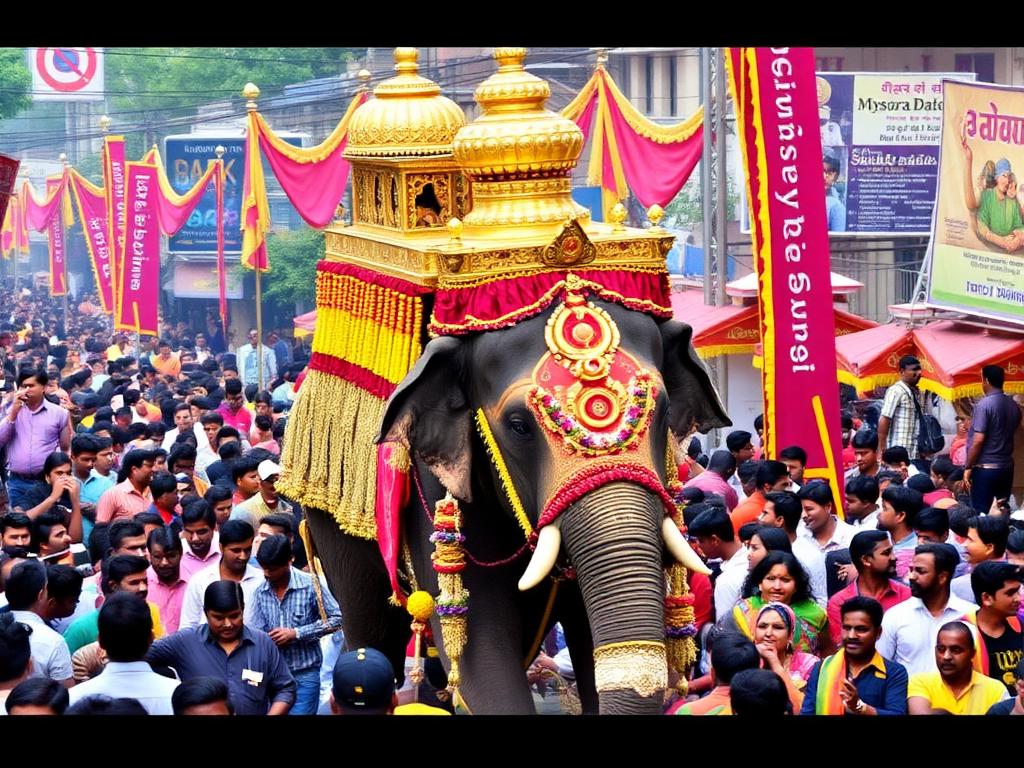
Festivals and Dasara
Nada Habba — the state festival — descends directly from Vijayanagara's Mahanavami and remains the defining public ritual of the city.
Chapter 17 · 5th century – present
Language and Literature
Kannada, a classical Dravidian language with a 1,500-year literary record, and the Mysore dialect that became its modern standard.
Chapter 18 · 17th century – present
Cuisine
Palace kitchens, Brahmin vegetarian traditions and the invention of Mysore pak and the Mysore masala dosa.
VI · Built Heritage
Chapter 19 · 9th century – 20th century
Architecture
Dravida temple form, Hoysala ornament, Indo-Saracenic public buildings and the planned civic architecture of the princely capital.
Chapter 20 · 14th century – 1945
Palaces of Mysore
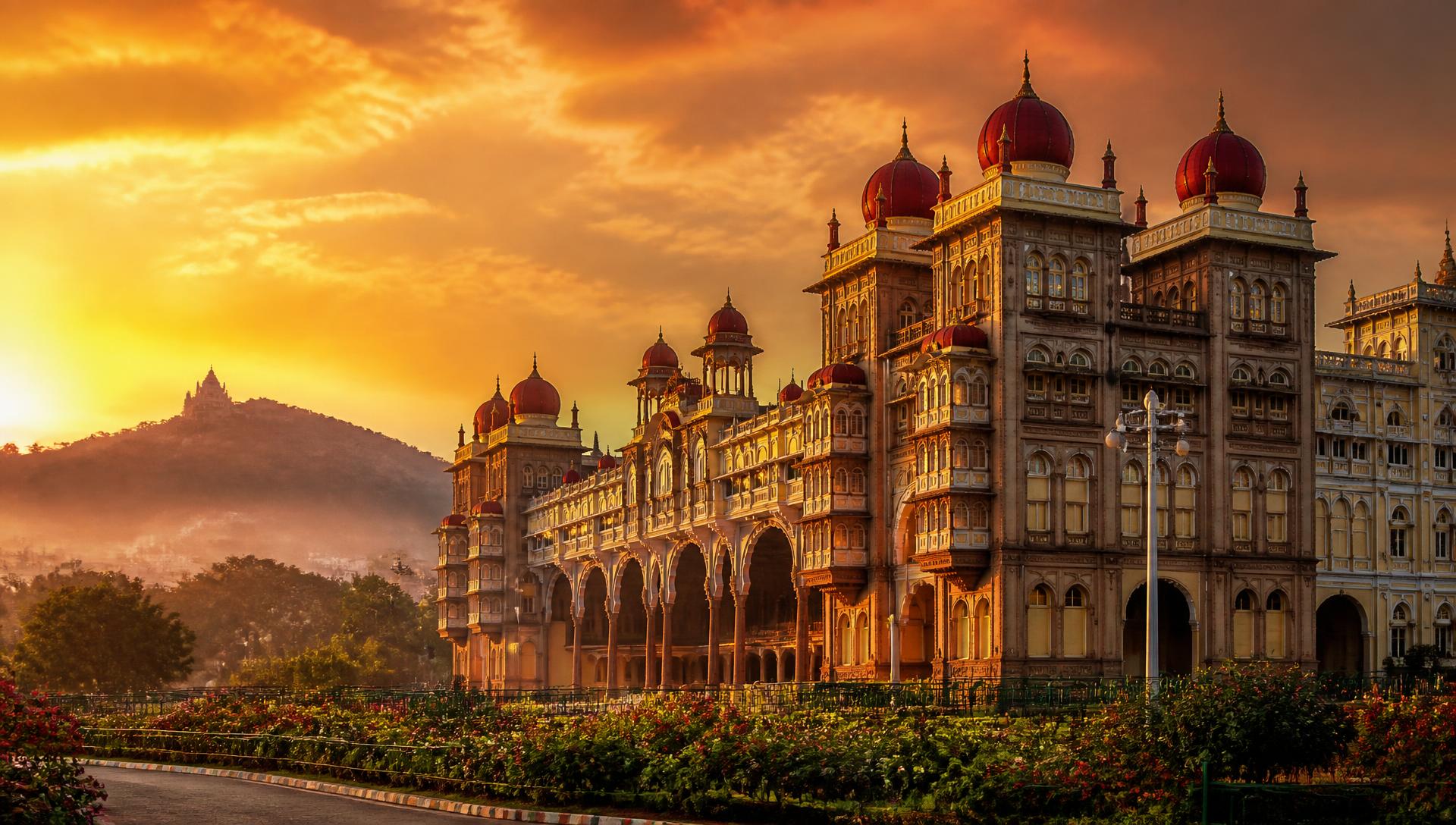
Amba Vilas and six other royal residences make Mysuru the 'City of Palaces'; each records a different phase of Wadiyar rule.
Chapter 21 · 9th century – present
Temples and Sacred Sites
Chamundeshwari, Somanathapura, Talakadu's buried shrines, Srirangapatna's Ranganathaswamy and the Jain centre of Shravanabelagola.
VII · Economy and Institutions
Chapter 22 · 1799 – present
Economy and Industry
Sandalwood, silk, gold, hydroelectricity and steel: the princely state's industrial policy created much of Karnataka's modern economic base.
Chapter 23 · 1833 – present
Education and Research
From the Maharaja's College to CFTRI and the Oriental Research Institute, Mysuru has been a research city for more than a century.
Chapter 24 · 20th century – present
Tourism and Heritage Management
Palaces, parks, wildlife reserves and World Heritage sites — and the conservation pressures that come with several million annual visitors.
Chapter 25 · 17th century – present
Famous Personalities
Rulers, engineers, scholars, musicians and writers whose work is inseparable from the history of Mysore.
The archive
25 chapters, every claim footnoted
Wikipedia is used only as a starting point. Substantive statements are anchored to B. L. Rice's Epigraphia Carnatica, S. Srikanta Sastri, Burton Stein, Karnataka State Gazetteers, the Archaeological Survey of India and Government of Karnataka records.
View the bibliography